Stack Your Firewood Like A Pro!
We're halfway through summer, and lots of folks are in the firewood stacking mood!
 With only about one month left of summer vacation, many folks are thinking ahead to the upcoming heating season, and rightly so! It comes upon us fast. Before you know it, the county fairs are done and over with, the sun is setting a little sooner each night, the kids are back in school, the migratory birds are flocking together and testing their new flight feathers, and the leaves on the trees are starting to show the first tinges of their brilliant autumn ensemble. While these changes tend to spur the onset of magnificent fall festivals and bring about warm and fuzzy feelings of cuddling up in front of the fire with a cup of hot cider, it can also stir up a sense of panic in those who haven't prepared for the cold days ahead.
We all tend to take on the role of the grasshopper instead of the busy ants from time to time, which is why we thought we'd bring you this informative blog in hopes of inspiring you to tend to an important, last minute task before the first leaf falls. For those of you who enjoy the beauty and warmth from a wood burning application as your heat source, getting a season's worth of firewood delivered, cut, and stacked is a top priority. If you haven't tackled this already, now is the perfect time to dedicate a weekend to preparing your fuel supply!
 WHAT'S THE DIFFERENCE BETWEEN A FULL CORD AND A FACE CORD?
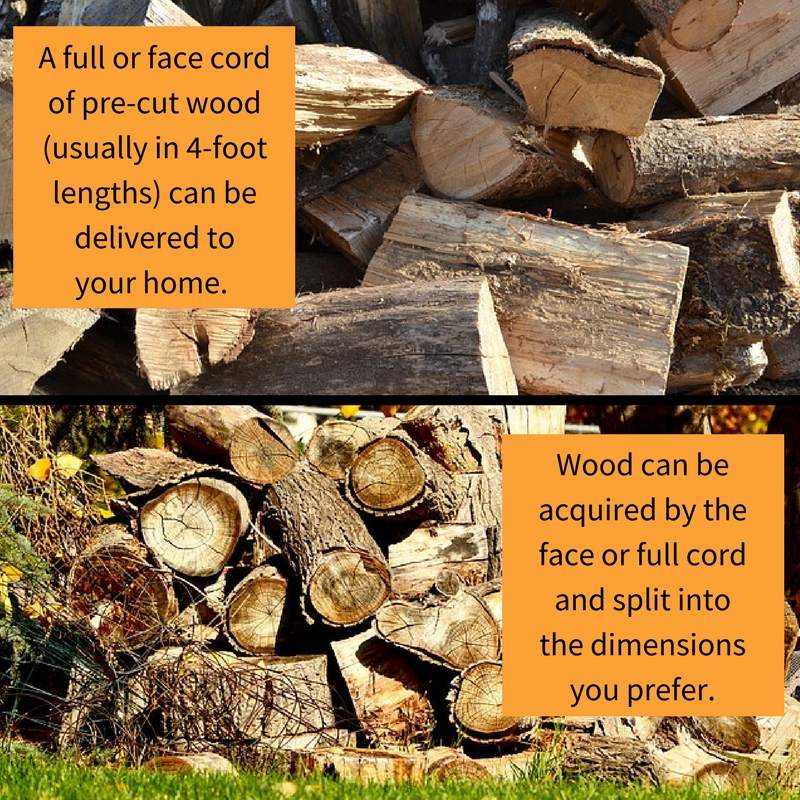
A face cord has approximately 230 pieces of firewood in it. Each piece is generally cut into 4 foot lengths. When stacked, a face cord measures 4 feet high by 8 feet wide. One full cord of firewood is equal to 3 face cords. The average home that uses wood as its main fuel source is more likely to stock up on one or two full cords of wood. Homes that utilize their wood burning application as a secondary heat source and only burn 1-2 fires per week would find it more economical to acquire a face cord for the season. Some people get their wood delivered to them in precut logs or slabs, while others choose to purchase a full or face cord and split it into desired lengths and thickness.
IS THERE A SPECIFIC TYPE OF FIREWOOD THAT I SHOULD GET?
The most important thing to remember is that the best burning logs are "seasoned". This means that the wood has had time to dry out, either naturally by air or manually in a kiln. Typically, firewood takes approximately six months to dry out completely by traditional methods. Many homeowners are aware of this and begin cutting and stacking their wood in the spring. However, for those that do not have this luxury or prefer not to be bothered with the process, precut and seasoned wood can be purchased from a local seller or tree service company.
 WHERE SHOULD I STACK MY FIREWOOD?
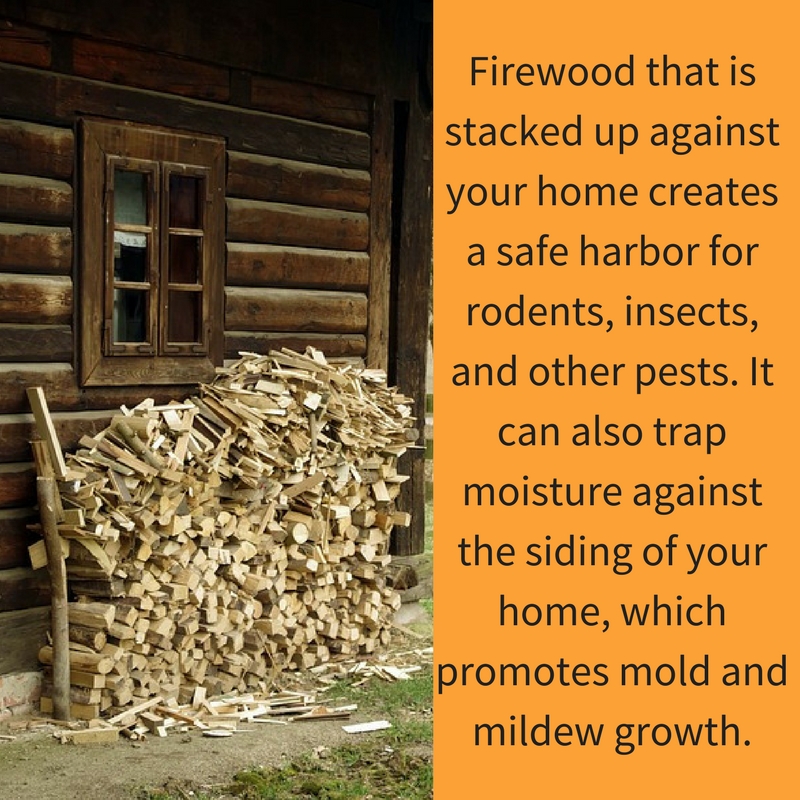
Choose an area that is allows the wind and sun to reach your wood pile. This exposure will "encourage" your wood to remain as dry as possible. Additionally, you'll want this area to be close to your house for easy hauling, but not against your home. Wood piles that are placed against the side of your house can be undesirable for a couple reasons:
- Logs pressed up against the siding of your house can trap moisture, which leads to mold and mildew growth. Depending on your home's construction, this growth can potentially damage the siding material of your home.
- With one side of your wood pile pressed up against your house, chipmunks, mice, and insects are shielded from the elements and thus inspired to call your stack of firewood "home".
WHAT IS THE BEST WAY TO STACK MY FIREWOOD?
Remembering that seasoned wood burns well because it is dry, it would only make sense that firewood needs to be kept dry, even in storage. The best part is, you don't need a wood rack to accomplish this! For a "traditional style" stacking of firewood, we recommend laying out 1x2x4 material or a wooden pallet to keep your logs off the ground. If your wood sits on the ground, it is subject to moisture accumulation which can lead to creosote build-up when burned. Providing a base, if you will, for the firewood to rest on not only keeps the pieces dry, but it also promotes air circulation and reduces the chance of decay and mildew or fungus growth.
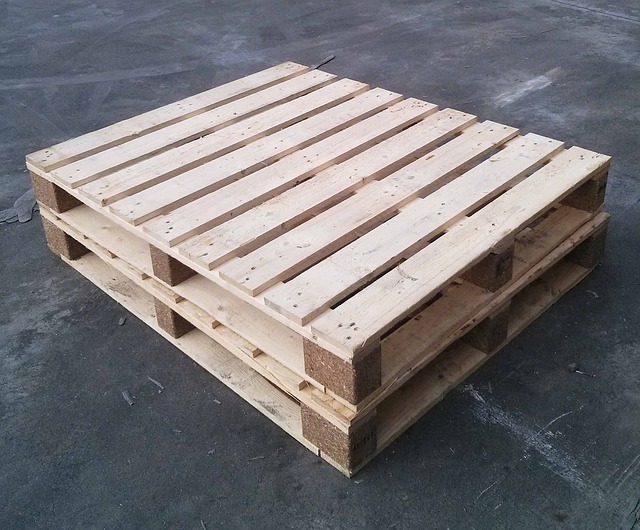 Pallets are a great foundation for your wood pile. They promote excellent airflow and are a convenient way to keep your firewood neat and organized! Many grocery stores and other businesses are happy to give their pallets away because they don't have the room to keep them. Once in awhile, you can even find wood pallets for free or fairly cheap on classified advertisement websites. The average wood pallet is constructed of pine or oak deckboard, and is approximately 48 by 40 inches. This will allow you to stack 2-3 individual rows of firewood on each pallet (depending on the dimensions that you've cut your logs). To avoid the stacks of firewood from becoming unsteady and possibly tumbling over, it is important to remember not to exceed 4 feet in height.
To stabilize the ends of your wood pile, you can do one of two things:
- From your local hardware store, purchase enough 6-foot metal T-posts to stand at the ends of each row of pallets. With a sledge hammer (or a post driver), strike the posts into the ground outside the corners of each end pallet. Consider driving the posts in an a slight inward angle. This will keep the firewood stack from pushing the T-posts outward later on.
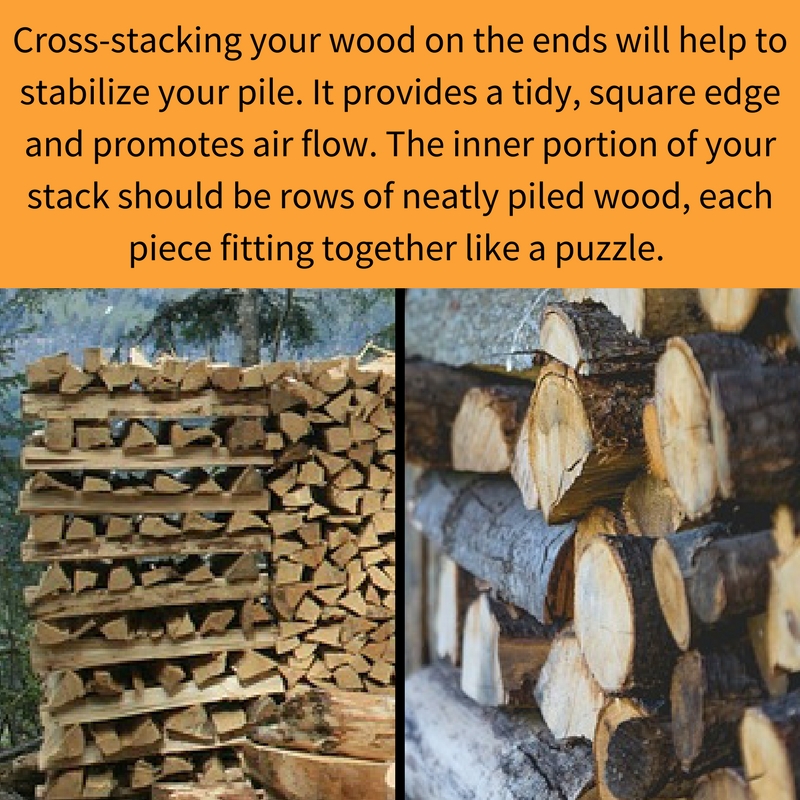 Cross-stack your wood on the end pallets only to stabilize the wood pile. Begin by stacking the first of row wood side-by-side, so that the pieces are lying perpendicular to the deckboards on the pallet. With the next row, stack the wood so that they are parallel to the deckboards on the pallet. Continue this pattern until you have a 4-foot high stack.
When stacking the remainder of your firewood, you can begin by placing the pieces side-by-side so that they are lying perpendicular to the pallet boards. Continue this for each row, carefully stacking the pieces so that they fit together like a puzzle. This give the appearance of a neat, attractive, and professional wood pile. Many people also choose to stack the wood, bark side up. This may help shed any remnant moisture from the stack, and additionally, it will not allow water to pool on top of your firewood.
A tarp can be used to cover the top of your wood pile; however, you may want to weigh the pros and cons before deciding on whether or not to utilize this method. While a tarp can be beneficial when it comes to shedding water from rain and snow, it can also be cumbersome when it comes to keeping rodents and insects at bay. Topping off your firewood pile with a tarp can also prevent sunlight and wind from reaching it entirely.
There is nothing quite like a wood burning fire, that's for sure. The crackling logs, the fullness of the flames, and the overall beauty of fire the way nature intended it to be are sheer enjoyment for many homeowners around the world. Keeping your seasoned firewood neatly stacked and dry for the upcoming heating season plays a big role in how well your heating application functions.
No posts found