How to Measure Arched Wood Stove Glass for Replacement
Measure the Size and Shape of Your Arched Stove Glass Correctly
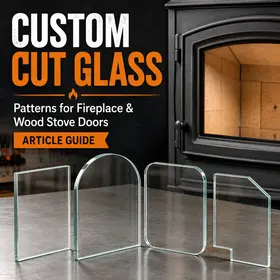
Replacing an arched wood stove glass panel takes a little more care than measuring a simple rectangle. The overall width and height matter, but so does the exact shape of the arch. Two glass panels can have identical outside dimensions and still have completely different curves at the top.
If your original glass is still intact, it is usually your best measuring reference. If the glass is broken or missing, the stove door opening, retaining area, manufacturer information, and a carefully made template may be needed to reproduce the correct shape.
The goal is not to guess what the arch looks like. The goal is to give enough accurate information to duplicate the original glass outline without changing dimensions, adding unverified clearance, or assuming that one arch shape is the same as another.
Why Arched Wood Stove Glass Requires More Than Width and Height
A rectangular piece of glass is generally defined by its width and height. An arched panel adds another variable: the shape of the upper curve.
For example, two panels may both measure the same overall width and height while having very different profiles. One might have long vertical sides followed by a shallow arch. Another might begin curving much lower and have a taller, more rounded top.
That is why simply ordering glass based on the maximum width and maximum height may not be enough.
Before measuring, look at the entire panel and identify:
- The overall maximum width
- The overall maximum height
- The height of the straight vertical sides, if present
- The point where the arch begins
- Whether both sides of the arch appear symmetrical
- Whether the bottom corners are square, rounded, clipped, or otherwise shaped
- Whether there are holes, notches, cutouts, or other special features
If you are uncertain about the glass type required for your appliance, review our guide to choosing the correct replacement glass before ordering.
What You Need Before Measuring
Gather a few simple tools before you start:
- A reliable tape measure or ruler
- Paper and pencil
- A permanent marker if marking a template rather than the glass
- Cardboard, poster board, or sturdy paper if a tracing template is needed
- A flat, protected work surface
- Your stove make and model information, when available
If the original panel is intact, remove it only after the appliance is completely cool and when it can be handled safely. Follow the stove manufacturer's instructions for glass removal and installation whenever those instructions are available.
How to Measure an Intact Arched Stove Glass Panel
Step 1: Measure the Maximum Overall Width
Lay the original glass flat on a stable surface. Measure from the farthest left edge to the farthest right edge at the widest part of the panel.
Record the actual glass dimension rather than measuring only the visible portion of the glass when it is installed in the door. Part of the panel is normally hidden behind the stove-door frame or retainers, so measuring the visible opening alone can produce the wrong size.
Step 2: Measure the Maximum Overall Height
Measure vertically from the lowest edge of the glass to the highest point at the center or peak of the arch.
Do not stop your measurement where the visible fire-viewing area ends. You are measuring the complete replacement panel.
Step 3: Measure Where the Arch Begins
This is one of the measurements missing from many older arch-glass measuring instructions.
If the panel has straight vertical sides before transitioning into the arch, measure from the bottom edge of the glass upward to the point where the straight side begins to curve.
Check both the left and right sides.
If the measurements are equal, the glass is probably symmetrical. If they differ, do not automatically average them. Recheck your measurements and inspect the original panel carefully because you may have an asymmetrical shape.
Step 4: Check the Shape of the Bottom and Corners
Do not assume every arched glass panel has a perfectly rectangular bottom section.
Look closely for:
- Rounded lower corners
- Clipped or angled corners
- Curved lower edges
- Notches
- Mounting-related cutouts
- Other non-standard shapes
If any of these features are present, record them carefully and determine whether a template or additional information will be required before ordering.
Step 5: Trace the Original Glass When the Arch Is Difficult to Describe
For an unusual arch, tracing the original intact panel can be much more useful than trying to describe the curve with a few measurements.
Place the glass on clean cardboard or sturdy paper and carefully trace around the complete outside perimeter. Keep the pencil or marker vertical so the tracing follows the actual edge as closely as possible.
Mark the template with the overall width and height and clearly identify the top and bottom.
Before relying on the tracing, place the glass back over the template and make sure the traced outline matches the original panel.
Important: Contact Fast Replacement Glass before sending or relying on a physical template so the required template format and ordering procedure can be confirmed.
What If the Original Glass Is Broken?
A broken panel can still provide useful information if enough of it remains.
Carefully arrange the pieces on a protected flat surface without forcing them together. If the perimeter can be reconstructed reliably, you may be able to determine the original maximum dimensions and trace the shape.
Do not assume that the metal opening in the stove door is the exact size of the glass. The replacement panel usually extends beyond the visible opening so it can be retained by the door assembly.
If too much glass is missing to establish the original outline, look for the stove manufacturer and model number. You can also use the Easy Replacement Glass Finder or browse replacement stove glass by brand to see whether a known replacement is available for your appliance.
Measuring When the Original Glass Is Completely Missing
This situation requires more caution because you no longer have the original glass as your reference.
Examine the stove door from the inside and identify the area where the original glass actually rested. This may be different from the visible opening seen from the front of the stove.
Look for:
- The glass seating area or channel
- Glass retainers or clips
- Old gasket impressions
- Clean or discolored outlines indicating the original glass perimeter
- Manufacturer markings on the door or appliance
Do not simply measure the front opening and enlarge the dimensions by an arbitrary amount. Glass clearances, overlap, gasket placement, retaining systems, and installation requirements can vary by stove.
If the original panel is missing, manufacturer specifications or a known replacement listing are preferable to guessing.
Watch: Measuring Arched Wood Stove Glass
This Fast Replacement Glass video provides a visual reference for measuring an arched stove glass panel. Use the video together with the measurement checks above, particularly when identifying the overall dimensions and shape of the original panel.
Do Not Add Your Own Clearance to the Measurements
One common measuring mistake is changing the size of an intact original panel because you think the replacement should be slightly larger or smaller.
If you are measuring the original glass itself for reproduction, record the actual dimensions of that glass unless the ordering instructions specifically tell you otherwise.
Do not automatically add a fraction of an inch because the door opening appears larger, and do not reduce the dimensions simply because you expect the glass to expand when heated.
If you are measuring from the stove door rather than an intact original panel, the correct finished dimensions should be established from the appliance design, manufacturer information, a verified replacement listing, or guidance from the glass supplier.
Use Ceramic Glass for Wood-Burning Stove Applications
Wood-burning stove doors operate in a high-temperature environment and require glass designed for that application. Do not substitute ordinary window glass or standard tempered glass simply because it can be cut to the correct shape.
Fast Replacement Glass offers ceramic replacement glass for high-temperature stove applications.
The correct glass type should still match the appliance manufacturer's requirements. If you are unsure what your stove originally used, identify the manufacturer and model before purchasing replacement glass.
Check the Glass Gasket While the Door Is Apart
Removing the glass also gives you an opportunity to inspect the gasket between the glass and stove-door assembly.
Look for gasket material that is:
- Frayed
- Crushed flat
- Missing in sections
- Brittle
- Loose
- Contaminated with old adhesive or debris
Do not assume that every stove uses the same gasket size or style. Window gaskets can differ from the larger rope gasket commonly used around the perimeter of a stove door.
If the glass gasket needs replacement, see our selection of wood stove glass window gaskets.
Common Arched Stove Glass Measuring Mistakes
Measuring Only the Visible Opening
The visible opening is not necessarily the same size as the glass panel. The edges of the glass usually extend behind the metal door frame.
Recording Only Width and Height
Maximum width and height do not completely define every arch. The beginning and shape of the curve may also be necessary.
Assuming the Arch Is Symmetrical
Many are, but do not assume yours is. Compare both sides of the original glass or template.
Guessing From Broken Pieces
A few fragments may not provide enough information to recreate an entire arch reliably. Use the stove make and model whenever possible.
Adding Your Own Clearance
If an intact original panel is available, record its actual dimensions rather than modifying them based on an assumed installation clearance.
Confusing Door Gasket With Glass Gasket
The large rope gasket around the stove door and the gasket supporting or sealing the window are different components on many stove designs. Identify the gasket actually used around your glass before ordering replacement material.
Overtightening Glass Retainers During Installation
Glass retainers are intended to hold the panel according to the appliance design. They should not be treated like clamps that must squeeze the glass as tightly as possible.
Follow the stove manufacturer's installation instructions.
Before Ordering Your Replacement Glass
Take a few minutes to review your information before placing an order.
- Confirm the stove manufacturer and model if available.
- Measure the original glass rather than only the viewing opening whenever possible.
- Record maximum width.
- Record maximum height.
- Record where the arch begins on both sides.
- Identify rounded corners, notches, angled edges, holes, or other special features.
- Trace unusual shapes when appropriate.
- Confirm the required glass type.
- Inspect the existing glass gasket.
- Double-check every measurement before submitting the order.
A few extra minutes spent checking an arch now can prevent ordering a panel that is the correct width and height but still has the wrong curve.
Frequently Asked Questions About Measuring Arched Stove Glass
Can I order arched stove glass using only the width and height?
Sometimes a known stove model or established replacement can be identified from those dimensions, but width and height alone may not define an unknown arch accurately. The location and profile of the curve may also be necessary.
Should I measure the metal opening or the old glass?
If the original glass is intact, measure the glass itself. The visible metal opening can be smaller than the actual glass because part of the panel is hidden behind the door frame and retainers.
How do I measure the height of an arched glass panel?
Measure from the lowest edge of the panel to the highest point of the arch. Then separately record the height at which the straight side transitions into the curved section when applicable.
What if one side of the arch measures differently from the other?
Measure again before assuming the glass is asymmetrical. If the difference remains, reproduce the original outline rather than averaging the two measurements.
What if my old stove glass is completely broken?
Try to identify the stove manufacturer and model first. If the broken pieces can safely reconstruct the full perimeter, they may help establish the original shape. Otherwise, manufacturer information or a verified replacement listing is safer than guessing from the viewing opening.
Can I make a cardboard template?
A carefully traced template can be helpful for an unusual shape, particularly when the original panel is intact enough to trace. Confirm the required template procedure with Fast Replacement Glass before submitting one for an order.
Can tempered glass be used in a wood stove?
Do not substitute standard tempered glass for ceramic stove glass in a wood-burning stove application. Use the glass material specified for the appliance and confirm the stove manufacturer and model when there is any uncertainty.
Do I need to replace the window gasket when replacing the glass?
Inspect the existing gasket while the glass is removed. If it is deteriorated, damaged, compressed, loose, or otherwise unsuitable for reuse, replace it with the correct gasket for the stove and glass assembly. Do not assume every stove uses the same gasket size or style.
Can I install replacement stove glass myself?
That depends on the appliance and your ability to follow its installation requirements. Always work on a completely cool appliance and follow the manufacturer's instructions for glass, gasket placement, retainers, and fasteners. If the correct procedure is unclear, obtain the appropriate service information or professional assistance.
Accurate Arch Measurements Make the Difference
Measuring arched wood stove glass is less about taking lots of measurements and more about capturing the right ones. Start with the original panel whenever possible, record its full width and height, determine where the arch begins, inspect both sides of the curve, and document any unusual corners or cutouts.
When the shape cannot be described confidently with measurements alone, stop guessing and use the stove make and model, a known replacement listing, or an approved template method.
The closer your information represents the original glass, the easier it is to identify or produce the correct replacement panel for your stove.
No posts found