How to Measure Arch Wood Stove Glass for Replacement
Measure the Width, Height and Curve of Arched Stove Glass Correctly
Replacing arched wood stove glass requires more than simply measuring the widest and tallest points. The curve at the top of the glass also has to be identified accurately so the replacement can be cut to the correct shape. This video guide shows how to approach the measuring process and explains the information you should gather before ordering custom ceramic stove glass.
Why Measuring Arched Stove Glass Takes Extra Care
A rectangular piece of stove glass can usually be described with a width and height. An arched piece adds another variable: the shape and position of the curve.
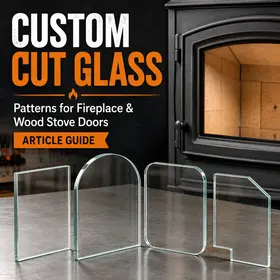
Two pieces of glass may have the same overall width and height but still have different top profiles. One might begin curving close to the upper corners, while another may have longer straight sides before the arch begins. Some stove windows may also use more complex shapes that cannot be accurately described as a simple symmetrical arch.
That is why it is important to identify the actual glass shape rather than assuming that every arched stove window is cut the same way.
What to Have Ready Before Measuring
Before starting, gather the basic tools and information you will need. A rigid tape measure or accurate ruler is generally easier to use than trying to estimate dimensions while the glass is still hidden behind a stove-door frame.
- A tape measure or ruler with fine measurement markings
- Paper or a worksheet for recording dimensions
- The stove manufacturer and model information, when available
- The old glass, if it can be removed safely and is complete enough to measure
- A clear photograph of the glass shape when additional clarification may be helpful
Record each measurement as you take it rather than relying on memory. When custom glass is being produced from customer-supplied dimensions, a small transcription mistake can become a very expensive typo.
Start With the Actual Glass Whenever Possible
If the original glass is available and can be safely removed, it is often the most useful reference for determining the replacement shape. The visible opening in a stove door does not necessarily represent the full dimensions of the glass because part of the glass may sit behind the door frame, gasket, retainers, or mounting hardware.
If the original piece is broken, save the pieces when it is safe to do so. Large surviving sections may still help establish the original width, height, straight-side dimensions, and curvature.
Do not automatically order a piece based only on the dimensions of the visible fire-viewing opening.
Measure the Overall Width
Measure the glass horizontally from its farthest left edge to its farthest right edge.
Keep the measuring tool straight across the piece. Do not follow the curved perimeter of the glass. You are looking for the overall horizontal dimension, not the distance around the edge.
Take the measurement more than once. If repeated measurements do not agree, stop and determine why before placing an order.
Measure the Overall Height
Next, measure from the lowest edge of the glass to the highest point of the arch.
For a symmetrical arched piece, the highest point will normally be near the center. Keep the measuring tool perpendicular to the bottom edge so that an angled measurement does not make the glass appear taller than it actually is.
Identify Where the Arch Begins
Overall width and overall height do not completely describe many arched glass shapes. You also need to understand where the straight side transitions into the curved top.
Depending on the specific glass pattern and ordering method, this may involve recording the height of the straight vertical portion before the arch begins. The difference between that point and the maximum overall height helps describe the rise of the curved section.
Do not assume a curve begins at a particular height simply because the glass looks symmetrical. Measure the physical piece or follow the measurement diagram supplied for the replacement pattern you are ordering.
What if the two sides do not match?
If the curve appears uneven, the straight portions are different heights, one corner has a special radius, or the glass has another unusual feature, treat it as a custom shape rather than forcing it into a standard arch measurement.
Photographs, a pattern diagram, or a physical template may be useful for unusual shapes, depending on the requirements of the glass supplier.
Check Your Measurements More Than Once
Custom-cut stove glass is made according to the dimensions submitted with the order, so accuracy matters. Measure every critical dimension at least twice and compare the results before finalizing the order.
Fast Replacement Glass currently instructs customers ordering custom ceramic glass to provide measurements as accurately as possible, within 1/16 inch, and to double-check those measurements before ordering.
A useful final check is to write all measurements down, put the measuring tool aside, and then start over. If your second set of measurements matches the first, you have much greater confidence in the information you are submitting.
Do Not Confuse the Door Opening With the Glass Size
This is one of the easiest mistakes to make when replacing stove glass.
The opening that you see from the front of the stove may be smaller than the actual glass panel. The glass typically extends behind portions of the door structure so it can be retained in position.
Whenever possible, determine the dimensions of the original glass rather than measuring only the visible opening.
Pay Attention to the Entire Shape
An arch is only one possible feature of a stove-glass panel. Before ordering, inspect the entire perimeter and look for anything that changes the shape.
- Straight vertical sides
- Curved or arched upper edge
- Rounded corners
- Angled sections
- Short straight sections before or after a curve
- An asymmetrical profile
- Notches, holes, or other special features
If any feature is present that is not represented by the product's measurement diagram or ordering options, confirm the required information before purchasing.
Confirm That You Need Ceramic Stove Glass
Wood, pellet, and coal stove viewing windows commonly use heat-resistant ceramic glass designed for the high-temperature environment of the appliance. However, the correct material should be determined by the appliance requirements rather than by appearance alone.
Do not substitute a different glass material simply because it can be cut to the same dimensions. If you are uncertain about the original material or the requirements for your stove, identify the manufacturer and model and verify the appropriate replacement before ordering.
You can also browse ceramic replacement glass for wood, pellet, and coal stoves to compare available replacement options.
Consider the Window Gasket While the Glass Is Out
Removing stove glass gives you an opportunity to inspect the flat window gasket or other sealing material used around the glass.
If the existing gasket is damaged, compressed, deteriorated, or otherwise requires replacement, determine the correct gasket type and size for the appliance before reinstalling the glass.
Do not assume that the window gasket is the same material or size as the rope gasket around the stove door. They perform different jobs and may use different profiles.
For more help, see our guide to finding the correct wood stove window gasket.
Common Arch Stove Glass Measuring Mistakes
Measuring only width and height
Those dimensions establish the overall size but may not fully define the arch. The transition between the straight sides and curved top can be equally important.
Measuring only the visible opening
The portion of the glass hidden behind the stove-door frame may make the actual panel larger than the visible window.
Rounding measurements unnecessarily
Record the dimensions you actually measure. Do not automatically round a measurement simply because a nearby fraction looks more convenient.
Assuming every arch is identical
Overall dimensions alone do not prove that two arched panels have the same curve.
Guessing from the stove model
Model information is extremely useful, but confirm the replacement dimensions whenever the ordering instructions require customer measurements.
Forgetting to check the broken pieces
If enough of the original glass remains, carefully arranging the surviving pieces can sometimes provide valuable information about the original dimensions and outline.
Information to Record Before Ordering
Before submitting an order for arched ceramic stove glass, organize the information you have collected.
- Overall glass width
- Maximum overall height
- Dimensions describing where the arch begins when required
- Any additional measurements shown on the applicable pattern diagram
- Stove manufacturer
- Stove model number, when available
- Notes about unusual corners, curves, holes, notches, or other features
- Photographs when additional shape clarification is needed
The exact measurements required can depend on the replacement shape being ordered. Always follow the measurement diagram associated with that particular glass pattern.
Related Replacement Glass Resources
If you are still determining what type of replacement you need, these resources can help you continue the process:
- Easy Replacement Glass Finder — help identifying the correct replacement-glass category.
- Stove and fireplace glass measuring guides — additional measuring information for common glass shapes.
- Fast Replacement Glass video guides — watch additional measuring, maintenance, and replacement videos.
- Custom ceramic stove glass — explore ceramic replacement glass options.
Frequently Asked Questions About Measuring Arched Stove Glass
Can I order arched stove glass using only the width and height?
Not always. Width and maximum height describe the overall size, but an arched panel may require additional information to define where the curve starts and what shape the arch follows. Use the measurement diagram associated with the specific glass pattern.
Should I measure the stove-door opening or the old glass?
When possible, use the original glass as the reference. The visible opening may not show the portion of the glass that extends behind the stove-door frame.
What if my old stove glass is broken?
Keep usable pieces if they can be handled safely. Larger fragments may still help determine the original dimensions and shape. If the original outline cannot be established confidently, additional identification or pattern information may be needed before ordering.
How accurate do my measurements need to be?
Custom replacement glass requires careful measurements. Fast Replacement Glass currently asks customers ordering custom ceramic glass to measure as accurately as possible, within 1/16 inch. Always follow the accuracy requirements shown for the product or ordering method you are using.
What if my arch is not symmetrical?
Do not assume that a standard symmetrical arch will fit. Record the unusual shape and verify what information, drawing, or template is required to reproduce it.
Can I use the stove model number instead of measuring?
A manufacturer and model number can help identify existing replacement glass, but measurements may still be required for custom-cut products. Follow the instructions for the specific replacement option you are considering.
Should I replace the glass gasket at the same time?
Inspect the existing window gasket while the glass is removed. If replacement is needed, identify the correct gasket type and dimensions for the stove rather than assuming all stove-window gaskets are identical.
Is tempered glass the same as ceramic stove glass?
No. They are different materials intended for different applications. Use the glass material specified for the appliance and do not substitute one material for another solely because the dimensions match.
Measure First, Order Second
With arched wood stove glass, the shape matters just as much as the overall dimensions. Take the time to identify the full width, maximum height, arch transition, and any additional features required by the applicable glass pattern. Record each measurement carefully and then repeat the process before placing the order.
A few extra minutes spent checking the old glass and confirming the arch profile can prevent ordering a replacement that is the correct general size but the wrong shape.
No posts found